First Day of Navratri
Daily Schedule
First Day of Navratri ( Pratipada )- After waking up early in the morning, resolute for the way you wish to pray for nine days.First of all, after taking bath,you must finish daily worshiping.
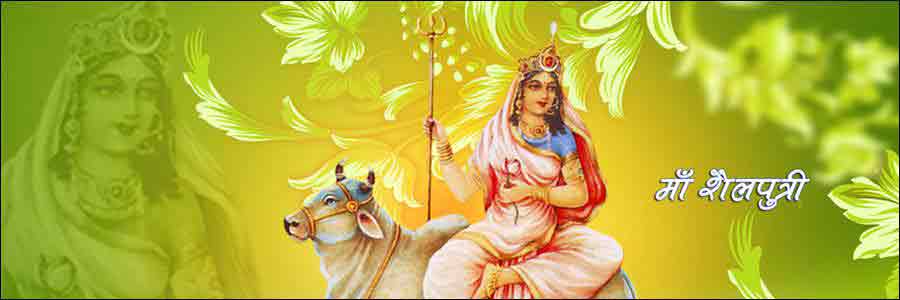
First Day of Navratri (Monday, 26th September 2022)
Pratipada (Navratri Day 1)
Kalash Stahapana
According to the custom of your family, if you are executing Kalash Sthapana on the first day of the Navratri, then it would be performed in the ABHIJINH MUHURAT. Abhijinh Muhurat’s time would vary on the basis of different places, so you should do your Kalash Sthapana by following the Mahurut.
According to your family custom, you should reap the barley at the time of Kalash Sthapana. Worshipping of Maa Durga should be done with PANCHOPCHAR (Fragrances, Flowers, Inceses, Diayas and Rice) or Shodoshopchar.
Weekly Horoscopes
Weekly Astro Horoscope | Weekly Love Horoscope | Weekly Career horoscope | Weekly Health Horoscope | Weekly Tarot Horoscope
Worshiping Maa Durga’s manifestation as Shailputri
Maa Durga’s form of Shilputri is being worshiped on the first day of Navratri. Maa Shilputri’s worship and Mantra’s incantation is as follows:
Vrisharodhaam Shooldharam Shailputreem Yashasvineem.
Kumari Pooja
Kumari Pooja should be done regularly according to the custom. However, Family’s custom is more essential in this matter. The days are predetermined for Kumari Poojan and it depends upon the tradition of family or clan, it can be executed from sixth day till ninth day of Navratri.
Astrology of the Day | Tarot of the Day | Monthly horoscope | Tarot Monthly
Saptshati Recitation
In Maa Durga’s worshiping, narration of Durga Shaptshati has a great significance. There are 13 chapters and you can fulfill your wishes by reciting these chapters.
There is a specific procedure which you should follow for Durga Shaptshati
1. All three Charitras should narrate of Durga Shaptshati.
2. Read first till middle Charitra in the situation of inability.
3. You can only recite the below Mantra in the condition of inability.
Namah Prkratyaye Bhadraye Niyatayah Pranatah Smataam.
4. Chant the Mantras by putting the Shaptashati on a wooden stool along with a new cloth on it.
5. Reading should not be done mutely and in haste.
Other Horoscopes
Free Daily Horoscope | Free Monthly Horoscope
Free Yearly Horoscope | Free Tarot 2022
6. Read its third, fifth, seventh, ninth, eleventh and twelfth chapters in series for harmony, illness of family member, nasty aggression or epidemic and for the destruction of the enemy.
7. Read it for 100 times in case of sorrow, physical problem, ineffectual of medicine, ruction of age and clan, enhancement of sickness, loss of land and to expand empire.
What does the Lord of Wealth Indicate in your Birth Chart? | Planets that make a Good Cricketer | Which direction is not good for Aquarium |
8. One can get nine times benefit by reading Shaptshati on Sunday, thousand times benefit by reading it on Monday, hundred times benefit on Tuesday, one Lakh times benefit on Wednesday, two Lack times benefit on Thursday and Friday and can get one Cr times benefit by its reading on Saturday.
9. The devotee who starts reading from sixth day of Shukl Paksha till fourteenth day, they get benefit in all aspects of life.
10. All wishes can be fulfilled by disciplined recitation of Durga Shaptshati.
Following are some significant Mantras from Durga Shaptashati
1. For relief from sorrow and poverty.
Daridraya-Dukh-bhayaharini ka tvadanya,sarvopkar-karnaay sadadrachita.
2. For peace from various sadism.
Davanalo yatra tathabdhimadhye, tatra sthita tvam paripasi vishvam.
3. For cheerfulness and destruction of adversity.
4. For objection protector.
Narration of Shri Ramcharitmanas
Devotees of God Ram recite Ramayana in Navaratri. For this purpose, they should do the worship of Tulsidas, Valmiki, lord Shiva and Hanuman on the first day. Thereafter, they should also worship Shri Ram-Seeta and their brothers (Bharat, Laxman and Shatrughna). Afterwards, they should recite NAVANHPARAYANA, which is in Balkand as follows:
Hiyam Harshe Kaamari Tab Sakar Sehej Sujaan.
Bahu Bidhi Umahi Prsansi Puni Bole Kripanidhan.
At the end, they should perform the Aarti of Shri Ram and Seeta ji.
Worship of Shree Hanuman
Devotees of Hanuman do the worship of Shri Hanuman during Navratri in two ways:
1. Sundarkand: Devotion of Lord Hanuman is done by reading one chapter of Sundarkand regularly and increasing one chapter of Sundarkand daily in nine days one by one. Also, there is a other way like you recite one chapter of Sundarkand and the reading of Sundarkand should begin after 29th couplet of ARANYAKAND till 60th couplet.
2. Hanuman Chalisa: Hanuman Chalisa is the best way of worshiping Lord Hanuman. It is being recited 108 times regularly; in that way Hanuman Chalisa is being recited 1008 times during the period of Navaratri. For this, it should be narrated 111 times daily instead 108 times and 120 recitations on the final day of Navratri. At the end, Bajrang Baan, Sankatmochan Hanumanashtak and Aarti should be performed.
| All About Navratri | Next – Second Day of Navratri >> |
Other Links You May Also Like | |